Elodea and Trout Food
Sculpins, Cressbugs, Scuds, Crawfish, and some Mayfly Nymphs
By Jerry Kerstetter
I have been fishing the Letort since the mid-70s, and this trout stream is a classic meadow limestoner. These streams have several kinds of aquatic vegetation that are not found in freestone streams. One of these plants is elodea. It thrives and expands in silt-laden stream bottoms. Any place silt accumulates, this elodea will take hold. When I started fishing the Letort, this elodea was the dominant instream plant. In many locations, this elodea was bank to bank, causing problems because of its expansive growth. The stream flow velocity slowed, which caused more silt collection. The stream water was displaced over its banks into side meadows again, causing slower velocity. Thick elodea beds established themselves in the stream bed and acted as stream deflectors, deflected flow right into the bank, causing erosion. When the traditional streambanks erode, the stream becomes wider, eliminating deeper water, decreasing the flow of the stream, and causing more silt collection.
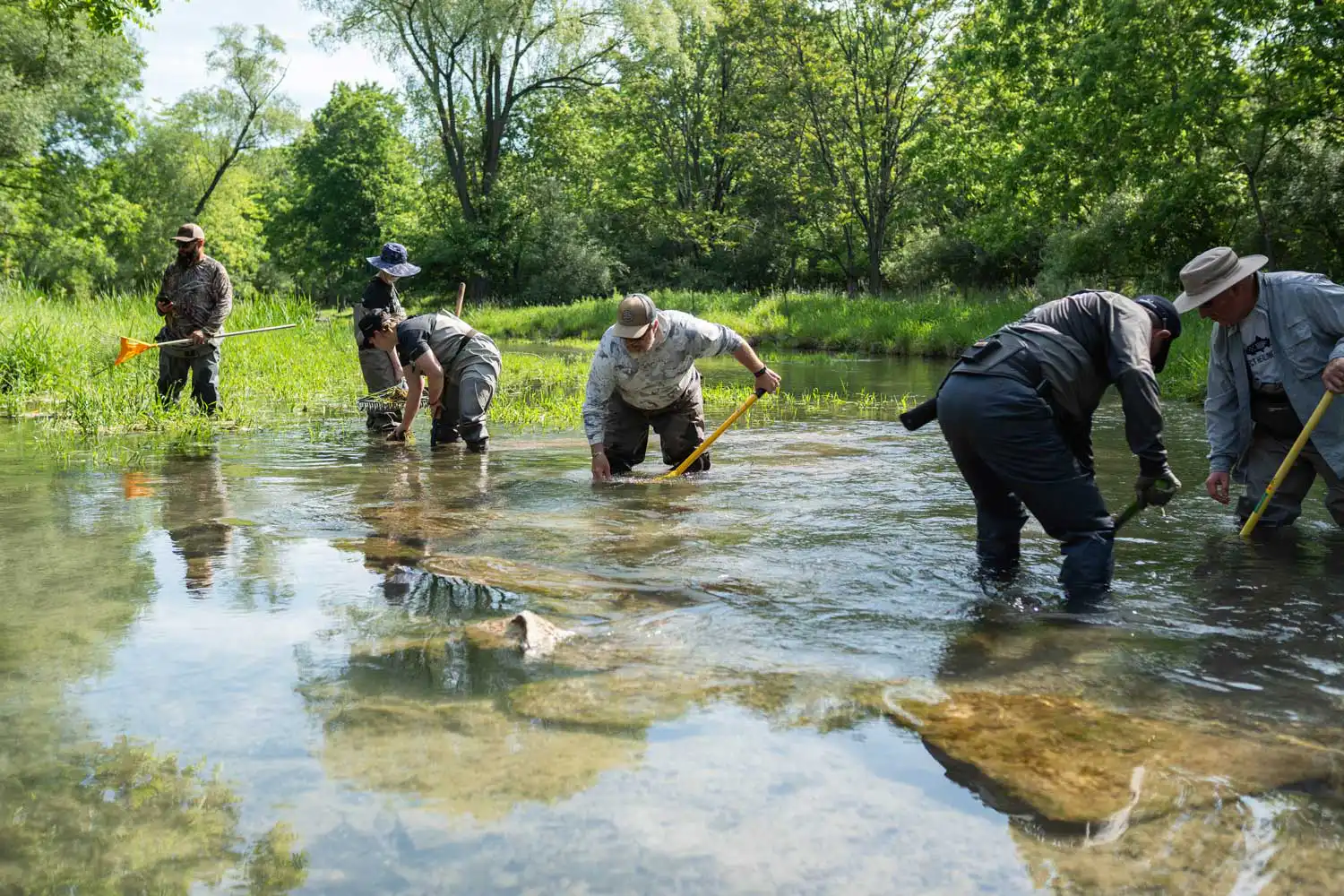
This elodea plant thrived in the silty Letort, and the watercress farm in the headwaters fertilized their watercress plants located in numerous bogs. This fertilized water then entered the Letort’s mainstem and fertilized all existing in-stream plants. Dave Williams (CVTU president) had a riverkeeper from England demonstrate elodea removal. He showed that selective elodea removal in one of these beds created an open channel. Water flowing through this channel cleared the silt, stopped the elodea growth, and restricted expansion. Several CVTU members began removing elodea from the Bonny Brook bridge downstream to the lower quarry bridge. I expanded this removal to some other stream sections. During this removal, it became obvious that this elodea contained a food chain of edible items for trout. Those items are sculpins, cressbugs, scuds, crawfish, and some mayfly nymphs. I was amazed by the number of these items in one clump of elodea. The sculpins would dart out of a clump of elodea. This darting was in short, fast spurts, moving in a downward direction, looking for another resting area. Most of these sculpins were one to three inches long. They had a flat head and a body that slimmed down into a rounded tail. The body coloration was a molted light to dark brown. They also had darker bands over their backs and sides. Their belly was light brown with hints of yellow. The smallest were lighter brown, and the ones slightly larger were darker brown. The biggest sculpins were much darker, heading into black. I am not an expert in this field. However, it seemed as they became darker, their size increased. Therefore, those almost completely black were the oldest. I did notice that those almost black sculpins did not exhibit the quick darting motion. I saw many of these blackish ones, carried with the stream current. The darting or swimming motion was very slow; I picked them up out of the water very easily. I think these blackish sculpins were heading into their end-of-life stages and would be easy prey for the trout. The largest numbers of sculpins were in that brownish coloration.
My sculpin fly is tied utilizing these brownish colors with an extended weight at the front. A barbell weight is tied onto the extension and sinks the fly quickly, simulating a downward darting motion. I have been using this extension weight system for many years, and it will work on any streamer. Some who have fished with me know nothing about this system. This is the first time I have talked about it; it’s one of my secrets. I will explain how I make this weight extension with a round bobby pin. The bobby pin will be fashioned so it has two eyes, one for the fly connection and the other for the leader connection. Keep in mind this extension does not have to be very long. Once it is completed and connected to the hook, the fly can move up, down, and sideways. The hook for this fly can be used to make the extension. Place the hook into the vice and then place the bobby pin on the hook at the pin bend. Pull both pin wires around the hook at the same time. This will make one eye and cut off one pin wire, leaving enough wire to be tied against the other side wire. This eye will be used to connect to the sculpin fly. Now, make a second eye in front of the other eye. Keep in mind the space between the eyes will be the platform to tie on the barbell weight. Make the second eye and cut off excess pin wire, leaving just enough so the two sections can be drawn together with the Cont. on P. 6 Page 5 thread. Remove the hook and place the extension in the vice and tie the two wires together and whip finish. Place the barbell weight on top of the two wires, which are just secured, and fasten it with thread as you would on a hook and whip finish. Remove the extension and place the hook in the vice and, connect the extension to the hook eye and again tie the two wires together and whip finish.
Tie My Sculpin Fly Pattern
Follow the below instructions for my sculpin fly:
Hook: Owner mosquito 5177-071 or other short shank hook
Thread: 6/0 brown or yellow
Feathers: Grizzly marabou brown an olive
Head: Sculpin wool brown Extension: Round bobby pin
Belly: Yellow marabou fibers
Weight: Bar bell weight
1. With hook in vice wrap thread to the bend.
2. Tie on 2 grizzly feathers on top of the hook and wrap thread forward 4 or 5 turns, cut off excess.
3. Tie on rear area yellow marabou fibers in front of the tail area.
4. Make thread loop and put the sculpin wool into loop and twist tightly. 5. Start wrapping the wool filled loop forward, after each wrap push back the last wrap, leave a small space behind hook eye for belly and top.
6. Tie off the loop and whip finish.
7 Pick out the wool head fibers on all sides, then cut top and bottom flat. 8. Tie on front belly fibers on top of hook extending to the rear belly fibers.
9. Reverse hook point up and tie on 2 olive grizzly marabou feathers extending to the hook point. If your sculpin fly settles on the bottom move it with a quick short rod tip movement, I call this the sculpin jerk and it could get the attention of a trout.
Share this article
Follow us
A quick overview of the topics covered in this article.