CVTU Volunteers Care for the Future of the Yellow Breeches at Wittlinger Preserve
CVTU Volunteers Maintain Riparian Buffer at Wittlinger Preserve
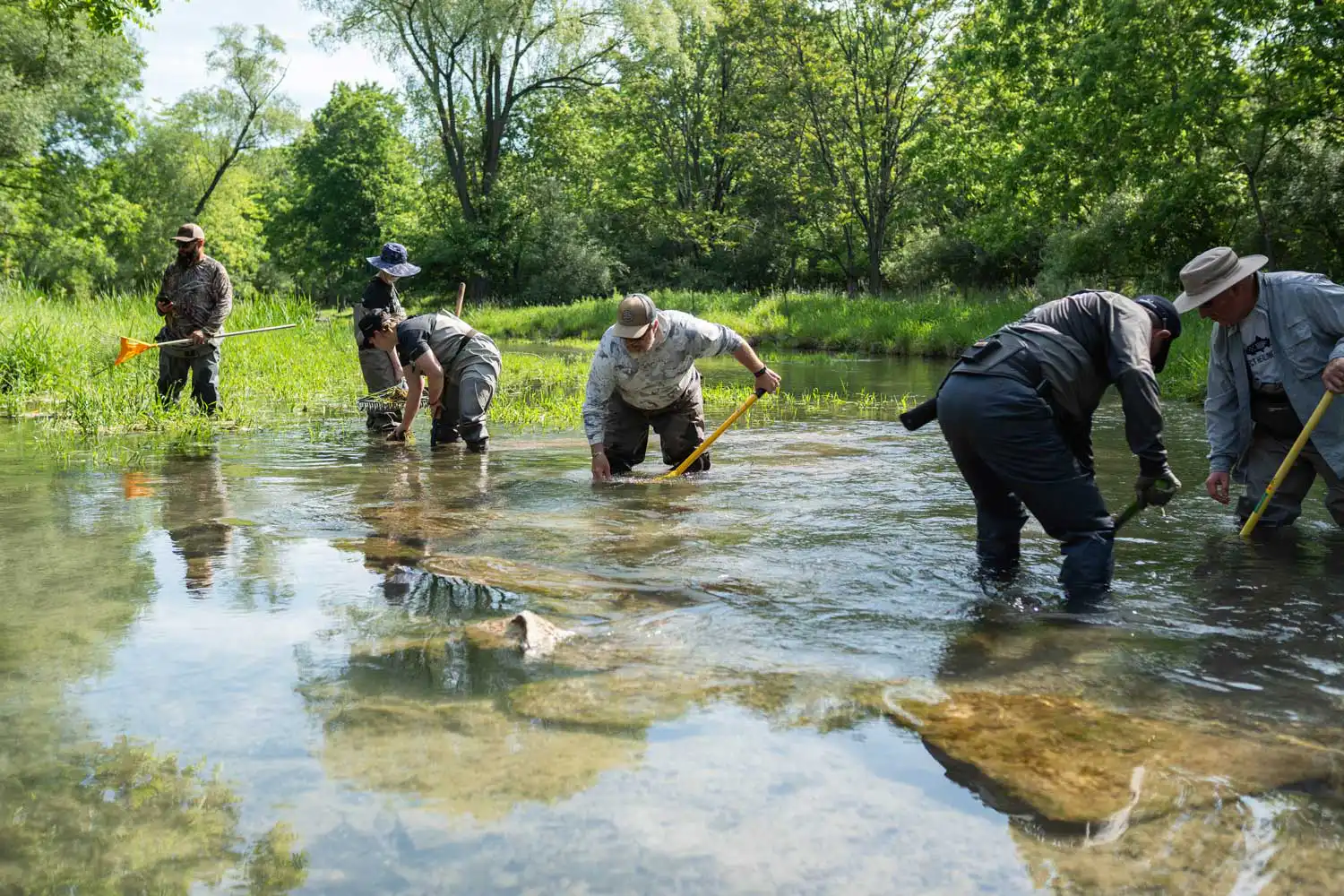
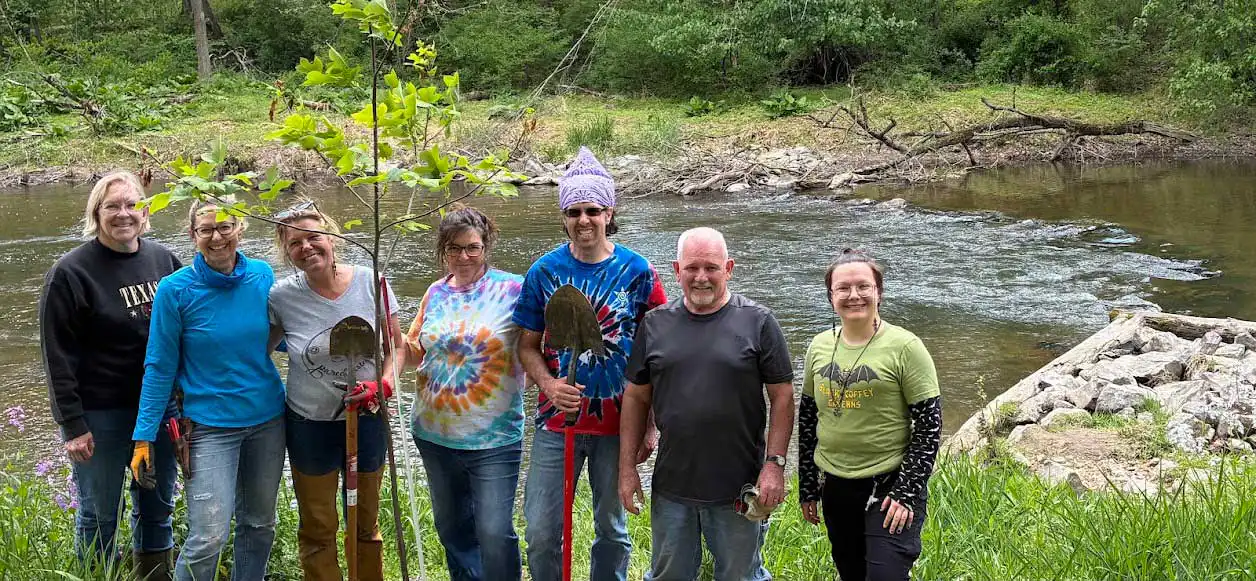
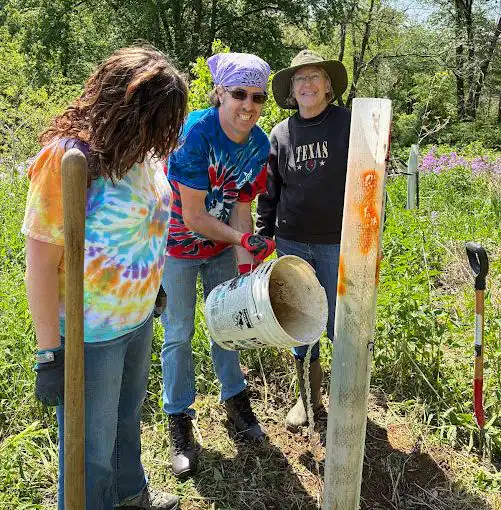
The Wittlinger Riparian Buffer continues to grow thanks to the dedication of Cumberland Valley Trout Unlimited volunteers and conservation partners. On Friday, May 8, eight volunteers gathered at Wittlinger Preserve to maintain the streamside buffer that was planted in 2022 alongside CVTU’s in-stream habitat improvement project. By the end of the morning, the group had contributed 45 volunteer hours helping care for the young trees and shrubs that will benefit the stream for years to come.
The work was encouraging. Roughly 75% of the original plantings are still alive, and about 25% are doing exceptionally well. Volunteers used weed trimmers to clear vegetation around the protective tree tubes, planted replacement native trees where needed, and performed general maintenance throughout the buffer.
A special thank you goes to CVTU member Renie Williams, who heads up PA Reel Sisters, for donating $250 toward the purchase of native replacement trees. Several PARS members also volunteered during the workday, making it another great example of conservation organizations working together.
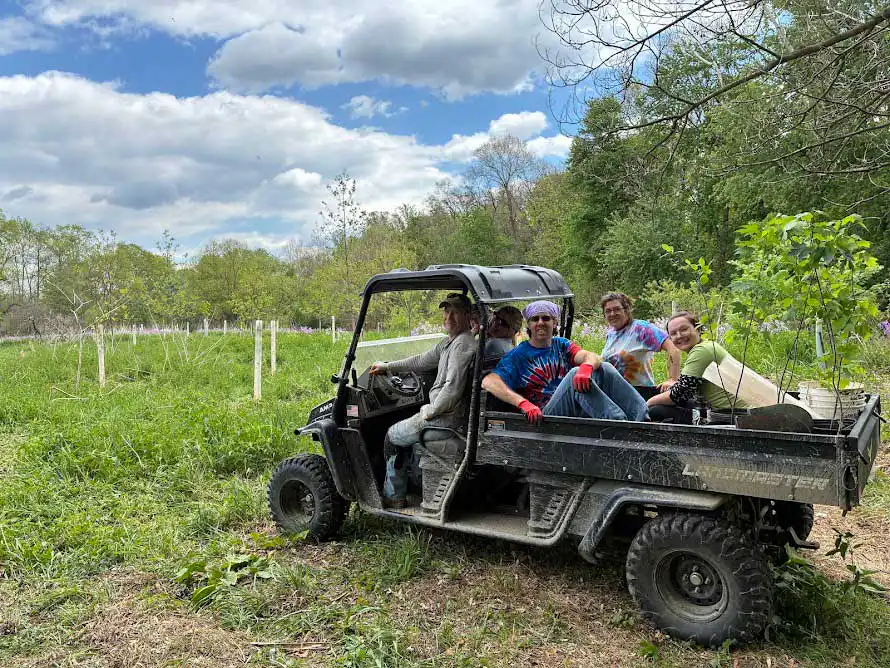
CVTU also appreciates Dickinson College Farm for providing the use of their electric jitney, which made transporting tools, supplies, and replacement trees to and from the planting site much easier.
It was also great to have Crowley Bickert, South Middleton Township’s new Environmental Programs Coordinator, join the volunteers and see the project firsthand.
What Is the Wittlinger Riparian Buffer?
A riparian buffer is simply a strip of native trees, shrubs, and grasses planted along the edge of a stream. While it may look like a row of young trees today, over time it becomes one of the stream’s best defenses.
As the trees mature, they provide shade that keeps water temperatures cooler during the summer, helping create better conditions for trout. Their roots stabilize streambanks and reduce erosion, while the vegetation filters sediment and nutrients from runoff before they reach the creek.
Riparian buffers also create habitat for birds, pollinators, amphibians, and countless other wildlife. Fallen leaves and insects from the buffer become part of the stream’s food web, supporting the aquatic insects and fish that make waterways like the Yellow Breeches such special fisheries.
Simply put, healthier streamside forests lead to healthier streams.
Why the Wittlinger Riparian Buffer Matters
One of the biggest misconceptions about restoration projects is that the work is finished once the trees are planted. In reality, the first few years are the most important. Young native trees compete with grasses and invasive plants for sunlight, water, and nutrients. Without regular maintenance, many of those plantings can be overtaken before they have a chance to become established.
By clearing vegetation, replacing trees that didn’t survive, and monitoring the health of existing plantings, volunteers are helping ensure the Wittlinger Riparian Buffer develops into a mature streamside forest that will benefit the Yellow Breeches for decades. Every maintenance day builds on the work completed in 2022 and increases the long-term success of the project.
Stewardship Is Ongoing
Planting a riparian buffer is only the first step. Young trees need several years of maintenance to give them the best chance of surviving and growing into a mature streamside forest. That means controlling competing vegetation, replacing trees that don’t survive, and checking on the health of existing plantings.
The continued success of the Wittlinger buffer is a testament to the volunteers who keep coming back year after year to care for the project.
Join Us
Additional maintenance work sessions are planned for Friday mornings at 10:00 a.m. over the next several weeks.
If you’d like to lend a hand, contact:
Anthony Davis
Email: [email protected]
Phone: (717) 557-1954
Whether you can volunteer for one morning or several, every helping hand makes a difference. The work being done today will help improve water quality, protect trout habitat, and benefit the Yellow Breeches for generations to come.
Share this article
Follow us
A quick overview of the topics covered in this article.